
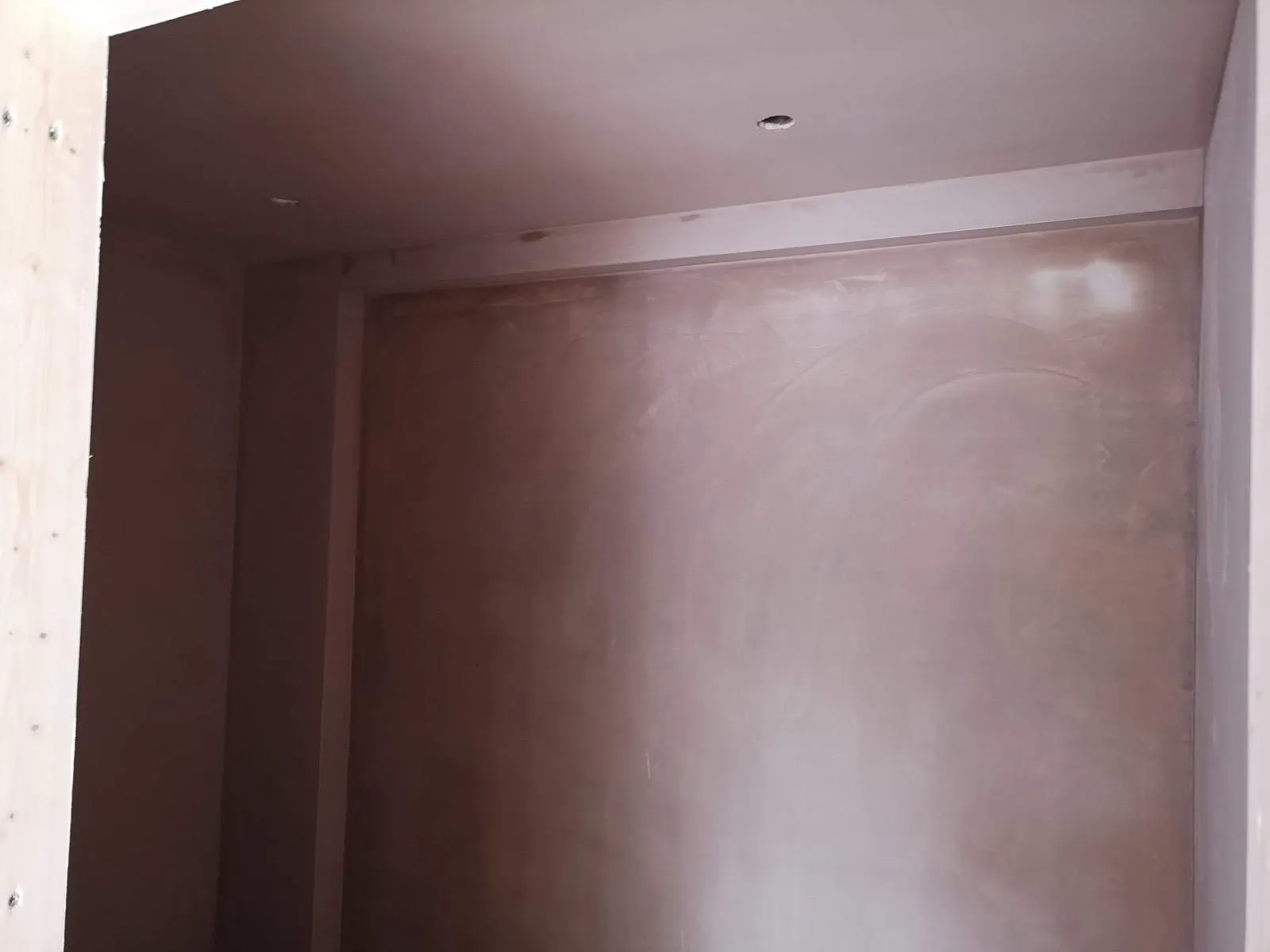
Coving or cornice?
The words get used loosely, but there's a real difference between them.
Coving is a simple, curved profile, usually a plain concave sweep. It's neat and understated, and suits most modern rooms.
Cornice is more decorative, with steps, mouldings and sometimes ornate detail. It's what you see in Victorian and Edwardian rooms and in period homes across Sussex, from Haywards Heath villas to Brighton and Hove townhouses.
Materials
| Material | What it's like | Good for |
|---|---|---|
| Gypsum plaster coving | Plaster core with a paper face; crisp profile | Most rooms; the usual choice |
| Polyurethane coving and cornice | Light, strong, wide range of profiles | Decorative profiles at a lower weight |
| Polystyrene coving | Very light and cheap | Rarely the best choice; looks it close up |
| Fibrous plaster cornice | Cast plaster, often with detailed profiles | Period rooms and matching original work |
How coving is fitted
Good coving is all about the corners and the joints.
- Check the surfaces. The wall and ceiling need to be sound, dry and reasonably straight along the line where the coving will sit.
- Measure and mark. Lines are marked along the wall and ceiling so the coving runs straight, even where the room isn't quite square.
- Cut the mitres. Internal and external corners are mitred so the profiles meet cleanly. This is where most DIY coving goes wrong.
- Fix it. Lengths are bedded on adhesive and supported while it sets, with pins where needed.
- Fill and finish. Joints, mitres and the small gaps along the edges are filled and wiped clean, so it reads as one continuous line.
Once it's dry, it's painted with the ceiling.
Why fit coving?
- It hides the crack. The wall-to-ceiling joint is where hairline cracks commonly appear. Coving bridges it.
- It tidies the paint line. No more wavy edge where the wall colour meets the ceiling.
- It finishes a room. Especially after a ceiling has been skimmed or overboarded.
- It suits the house. In a period room, a cornice can restore some of the original character.
Choosing a size and profile
Proportion matters. A deep, ornate cornice in a low-ceilinged modern bedroom can feel heavy, while a skinny cove in a tall Victorian front room looks lost. As a rough guide, higher ceilings suit deeper profiles. If you can, look at a sample piece held up in the room before deciding, ideally in the corner where it will be most noticeable.
Replacing old coving
If a room already has coving that's cracked, badly fitted or the wrong style, it can be taken down and replaced. Removing it usually pulls away some of the plaster behind, so the wall and ceiling along that line need making good before the new coving goes up. If the room is being re-skimmed anyway, it's the ideal time to do it.
Kitchens and bathrooms
Coving works in kitchens and bathrooms too, but steam and condensation are harder on it. A well-sealed, properly painted coving copes fine. In a bathroom that doesn't have good ventilation, polyurethane coving can be a sensible choice, because it isn't affected by moisture in the same way as a paper-faced plaster cove.
Painting coving
New plaster coving needs to dry before it's painted. The paper face takes a mist coat or primer first, like fresh plaster. A fine bead of decorator's caulk along the top and bottom edges, run before painting, gives the crisp lines that make coving look properly finished.
Period cornices
Original cornices in older houses are worth keeping where they can be saved. Small areas of damage can often be repaired. Reproducing a long run of an ornate original profile, or recreating one that's been lost, is specialist fibrous plaster work, and a matching profile may need to be made specially. If that's what your room needs, we'll talk you through the options.
Listed and older properties
If your home is listed, changes to features such as cornices can affect its special interest. Mid Sussex District Council explains how listed building consent applies to both inside and outside work. Check before replacing original features.
Part of a bigger job
Coving is usually fitted after the ceiling and walls have been plastered and have dried, so it often follows on from skimming or overboarding. See our pages on overboarding cracked ceilings and smoothing textured ceilings.
Frequently asked questions
What's the difference between coving and cornice?
Coving is a simple curved profile. Cornice is more decorative, with steps and mouldings, and is common in period homes.
Can coving hide a crack between the wall and ceiling?
Yes. It bridges the joint where those cracks usually appear.
Can you match an existing cornice?
Common profiles can often be matched. An ornate original may need a specially made profile, which is specialist work.
Should coving go up before or after plastering?
After. The walls and ceiling should be plastered and dry first.
What size coving should I choose?
It depends on the ceiling height and the style of the room. Higher ceilings suit deeper profiles.
Are your quotes free?
Yes. Tell us about the room and send a photo if you can, and we'll come back to you with a free quote.
Want coving fitted?
Tell us about the rooms and send a photo or two, including any existing coving or cornice. We'll come back to you with a free quote. See all our plastering services in Haywards Heath.
Back to all services