
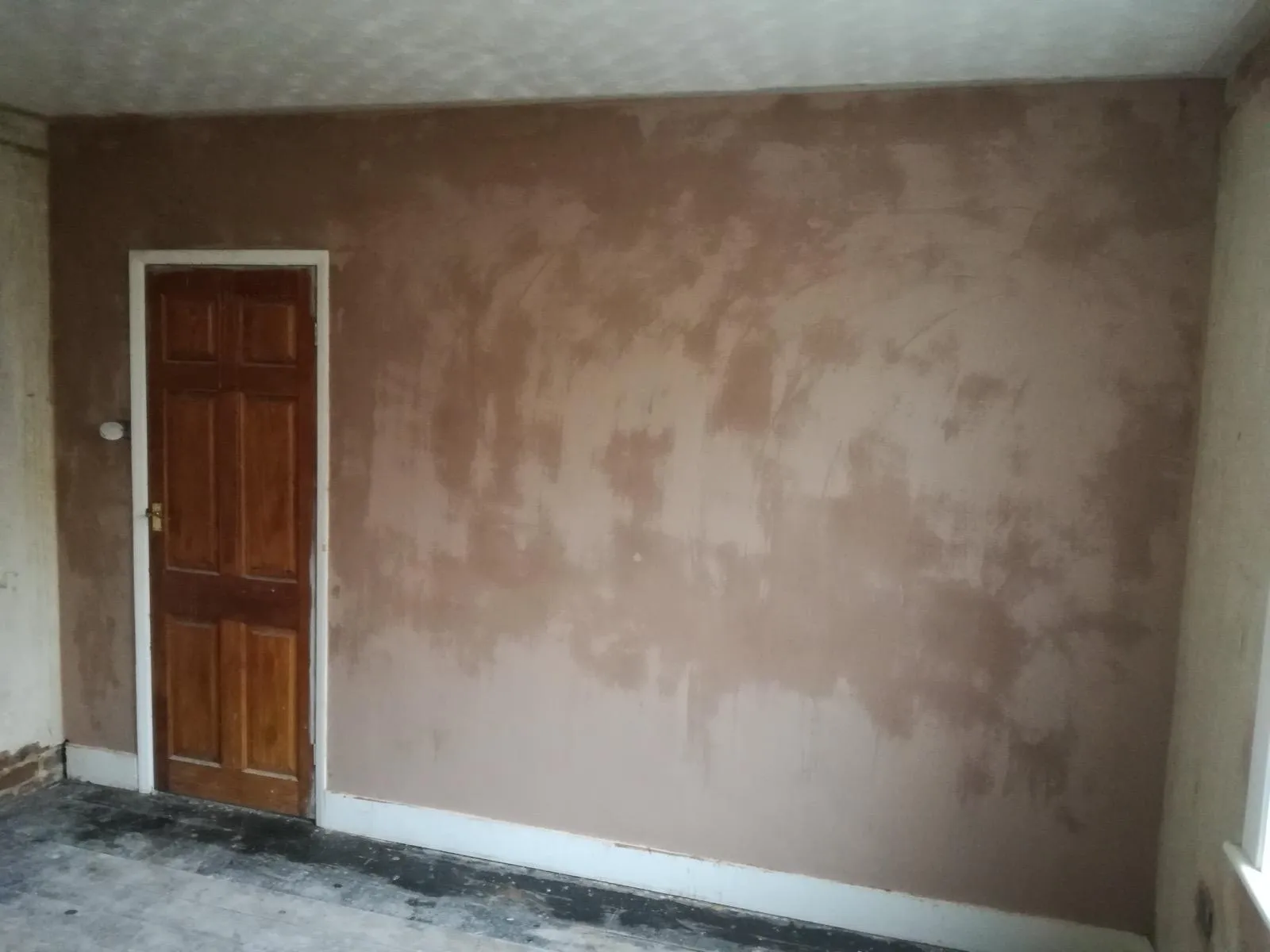
Common plaster problems
| Problem | What it looks like | What's usually behind it |
|---|---|---|
| Hairline cracks | Fine cracks in walls or ceilings | Normal shrinkage or seasonal movement |
| Cracks along straight lines | Cracks that follow board joints | Joints that weren't taped, or boards that move |
| Blown plaster | Sounds hollow when tapped; may bulge | The plaster has come away from the wall |
| Holes and gouges | Old fixings, sockets, pipes, impact damage | Previous work or knocks |
| Damaged corners | Chipped or crumbling external corners | No bead, or a bead that's failed |
| Damp-damaged plaster | Stains, bubbling paint, powdery surface | Moisture in the wall, often with salts |
How a proper repair is done
- Find the edges. Tapping across the wall shows how far the hollow plaster goes, which is usually further than the visible damage.
- Cut back to sound plaster, with clean edges. Patching over loose plaster is why so many repairs fail.
- Prepare the background so the new plaster grips and doesn't dry too quickly.
- Build up deep areas in layers, with an undercoat plaster, rather than trying to fill them in one go.
- Finish to match the wall around it, flush and smooth, so the edge of the repair doesn't show through paint.
Why cracks keep coming back
A crack filled with a tube of filler and painted over will often reappear within a season. Fine cracks in plaster move as the house moves with the weather. A better repair opens the crack out, bridges it with scrim or mesh tape, and plasters over it so the new finish has something to hold it together.
Most cracks are harmless. Wide cracks, cracks that are getting bigger, diagonal cracks running from the corners of doors and windows, or doors that have started to stick, can point to movement in the building itself. If we see signs like that, we'll tell you, and a surveyor may be worth calling before anyone plasters over it.
Damp-damaged plaster
Plaster that's been wet doesn't just need drying out. Water moving through a wall carries salts with it, and those salts end up in the plaster. Even after the leak or damp is fixed, they keep drawing moisture out of the air, so the patch stays damp and stained. The usual answer is to remove the contaminated plaster and replace it, once the cause of the damp has been dealt with. Plastering over a wall that's still wet just repeats the problem.
Lath and plaster ceilings
Older houses often have lath and plaster ceilings: plaster pushed through narrow timber laths and held on by the "nibs" that form behind them. When those nibs break, the plaster sags. A small damaged area can sometimes be patched. A ceiling that's sagging across a wide area, or has bulges and long cracks, is usually better overboarded, and a badly sagging ceiling shouldn't be left. See our page on overboarding cracked ceilings.
Making good after other trades
Rewires, new plumbing, moved sockets, taken-out fireplaces and removed fitted furniture all leave damage behind. Making good is a big part of repair work: chases filled and finished flush, old fixing holes repaired, and the patches where kitchen units or a boiler used to be brought back level with the rest of the wall.
Corners and edges
External corners take the most knocks, from hoovers, pushchairs and furniture being moved. A chipped corner with no bead underneath will keep breaking. The lasting repair is to cut back the damaged plaster, fit a new angle bead so the corner is straight and protected, and plaster up to it.
Repair, re-skim or re-plaster?
If the damage is in a few places and the rest of the wall is sound, a repair is the sensible answer. If the wall has been patched many times, a repair can still show, and skimming the whole wall gives one even finish. If large areas are hollow, it's often better to take the plaster off and start again. See our pages on plaster skimming and re-skimming and renovation plastering.
Older homes
On older solid-walled houses, the original plaster may be lime. Repairs to lime plaster usually need to be in lime, because a hard modern plaster next to soft lime can crack at the join and trap moisture. Historic England has useful advice on maintaining and repairing an older home.
Frequently asked questions
Can you repair just one area of plaster?
Yes. Single cracks, holes and patches can be repaired without re-plastering the whole wall.
Will the repair show when I paint?
A well-finished repair shouldn't. On walls that have been patched many times, skimming the whole wall can give a more even result.
Why does my plaster sound hollow?
It has come away from the wall behind. Hollow plaster needs cutting back to sound edges and rebuilding.
Can you fix cracks in a ceiling?
Yes. Small cracks can be repaired. A ceiling that's sagging or badly cracked is usually better overboarded.
Can you plaster a wall that's had damp?
Yes, once the cause of the damp has been fixed and the damaged plaster removed.
Are your quotes free?
Yes. Send us a photo of the damage and tell us roughly how big it is, and we'll come back to you with a free quote.
Got plaster that needs fixing?
Send us a photo of the damage and tell us where it is and roughly how big. We'll come back to you with a free quote. See all our interior plastering services.
Back to all services