
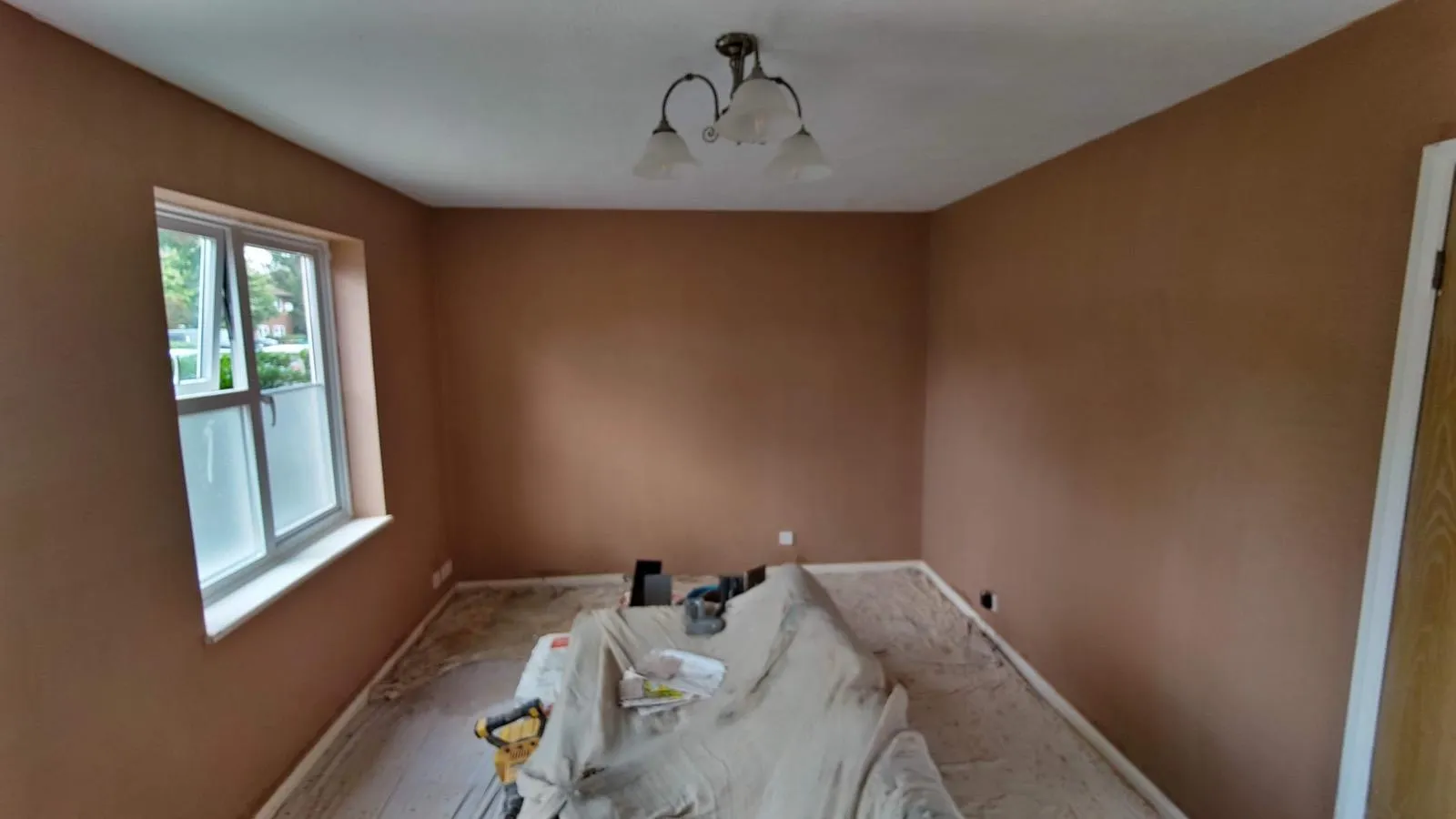
What renovation plastering covers
- Hacking off old plaster that's blown, damp-damaged or too uneven to save.
- Re-plastering bare walls from the brick or block up.
- Boarding and skimming new partition walls, ceilings and loft or garage conversions.
- Overboarding old ceilings that are cracked or sagging.
- Making good after rewires, new plumbing and moved sockets and switches.
- Making good after structural work, such as knock-throughs, new openings and removed chimney breasts.
Where plastering fits in a renovation
Timing matters more than most people expect. Plastering should come after the work that goes inside the walls, and before the work that goes on them:
- Strip-out and structural work. Walls removed, openings formed, steels in.
- First fix. Electrical cables, back boxes and pipework installed.
- Plastering. Walls and ceilings boarded, plastered and skimmed.
- Drying time. New plaster puts a lot of water into a house.
- Second fix. Sockets, switches, radiators and fittings go on.
- Decorating, flooring and kitchens.
If the electrician comes back after we've finished to run another cable, the new plaster gets cut into again. Getting the order right saves money and leaves a better finish.
Hacking off: when old plaster has to go
Sometimes taking the plaster off is the only sensible option. Plaster that's hollow across large areas, plaster contaminated with salts from old damp, or walls that are so out of true that skimming won't straighten them are all candidates. It's dusty, heavy work and creates a lot of waste, so it's planned with skips, dust sheets and sealed doorways. Then the bare masonry is plastered back up with an undercoat and a finish coat. See our page on traditional float and set plastering.
Where the old plaster is sound, there's no need to strip it. A skim over it is quicker, cleaner and cheaper.
Removed fireplaces and chimney breasts
Taking out a fireplace or a chimney breast leaves an awkward area to make good: a hole where the opening was, uneven brickwork, and often old soot-stained plaster that will bleed through new paint if it isn't dealt with. The opening is usually blocked up with a vent left if the flue stays, and the area is plastered back flush with the rest of the wall. Removing a chimney breast is structural work and needs building control involvement, so that side of it should be sorted before the plasterer arrives.
Knock-throughs and new openings
Opening up two rooms leaves a lot of making good: the reveals either side of the opening, the line of the old wall on the ceiling, and often a steel beam to box in. Steels are usually boxed in with plasterboard and then skimmed. Depending on the work, building control may have requirements for fire protection around a steel, so it's worth checking what's been specified before it's boxed in.
Drying out after a renovation
A house that's just been re-plastered holds a lot of water. Walls skimmed on board dry fairly quickly. Walls plastered from bare brick take much longer. That matters for what comes next: painting too soon causes peeling, and laying wooden floors or fitting kitchens into a house that's still drying can cause problems too. Keep windows open, keep a gentle background heat on, and avoid forcing it dry with heaters. Our guide to plaster drying times has more detail.
Older properties
Renovating an older house needs a lighter touch. Victorian and earlier houses with solid walls were built with lime, and they need to breathe. Stripping lime plaster off and replacing it with gypsum on a damp-prone wall can create problems that weren't there before. Original features such as cornicing and ceiling roses may be worth keeping and repairing. Historic England has helpful advice on looking after and repairing older homes.
Working with your builder or project manager
On bigger renovations, plastering is usually one of several trades on site. Tell us who's doing what, when the first fix will be finished and what the deadlines are for the next trades, and we'll fit our work around them. On smaller projects managed by the homeowner, we can talk you through the order of works so the plastering lands at the right moment.
Landlords and empty properties
Renovating a rental between tenants usually means getting walls and ceilings back to a clean, sound finish quickly, so the decorators and the next tenants aren't held up. We plaster rental properties as well as family homes.
Frequently asked questions
When should the plasterer come in during a renovation?
After the structural work and the first fix of electrics and plumbing, and before second fix and decorating.
Do I need to take all the old plaster off?
Not usually. Sound plaster can be skimmed. Only hollow, damp-damaged or badly uneven plaster needs to come off.
Can you make good after a rewire?
Yes. Chases and new socket positions are filled and finished flush.
How long before I can decorate a renovated room?
When the plaster has dried to an even pale pink all over. Skims on board dry quickest; plaster on bare masonry takes longer.
Do you plaster older houses?
Yes. On older solid walls, we'll look at what's there first, because some walls need a different approach from modern ones.
Are your quotes free?
Yes. Tell us about the project and send a few photos, and we'll come back to you with a free quote.
Planning a renovation?
Tell us what's being done, which rooms are involved and roughly when the first fix will be finished. Send a few photos if you can. We'll come back to you with a free quote. For one-off damage, see our page on plaster repairs and patching.
Back to all services