
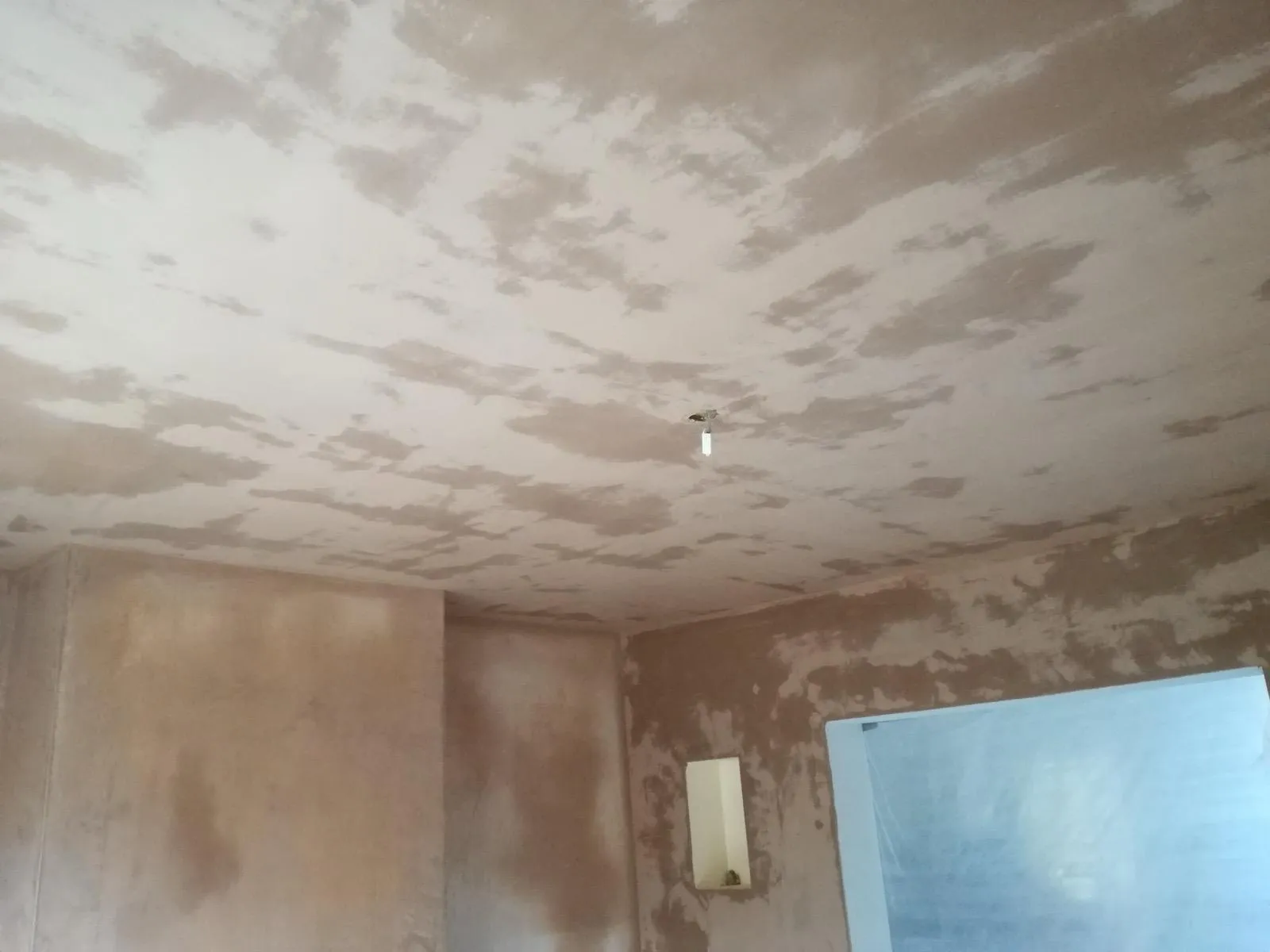
The three options at a glance
| Option | What it is | Best when | Mess and disruption |
|---|---|---|---|
| Skim | A thin finishing coat over existing plaster or board | The surface is sound but rough, patched or marked | Lowest |
| Re-plaster | Old plaster removed and new coats built up from the wall | The old plaster is loose, blown or crumbling over large areas | Highest |
| Overboard | New plasterboard fixed over the old surface, then skimmed | A ceiling is cracked, uneven or textured but basically secure | Medium |
Skimming
A skim is a thin coat of finishing plaster over a surface that's basically sound. British Gypsum's guidance for its finishing plaster gives a total thickness of at least 2 mm in two coats.
It works well after stripping wallpaper, over walls with years of filled holes, and on new plasterboard. It won't fix plaster that's coming away from the wall: a skim is only as good as what's under it. See our plaster skimming service.
Re-plastering
When old plaster sounds hollow when tapped, crumbles or comes away in large areas, skimming over it just hides the problem for a while. The old plaster is removed back to the brick or block, and new plaster is built up in coats, usually a backing coat followed by a finish. This is what float and set plastering means.
It takes longer, makes more mess and needs more drying time than a skim, but it gives a completely new surface.
Overboarding
Overboarding fixes new plasterboard over an existing ceiling or wall, then skims it. It's often the best fix for ceilings that are cracked, uneven or textured, because it avoids pulling the old ceiling down. It also leaves an old textured coating sealed in place behind the board. See our ceiling overboarding service.
The ceiling has to be secure enough to fix into, and the room loses a little height.
When small repairs are enough
Not every problem needs a whole wall or ceiling redone. A few cracks, a hole or one blown patch can often be cut out and repaired so it blends in. See our plaster repairs.
Older homes and lime plaster
In older houses with solid walls, the original plaster is often lime. Skimming it in gypsum or re-plastering in gypsum can trap moisture in the wall. The right fix may be to repair or re-plaster in lime instead. Ask your plasterer what the walls are made of before choosing.
Textured ceilings: check first
If you're thinking about skimming or overboarding a textured ceiling, find out what's in it first. Some older coatings contain asbestos. Our guide to Artex and asbestos explains what to check.
Frequently asked questions
Is skimming cheaper than re-plastering?
Usually, because there's less removal, less material and less drying time. But skimming over failing plaster can cost more in the end if it has to be redone.
Can you skim over a cracked ceiling?
Fine cracks, yes, once they're prepared. If the ceiling is badly cracked, sagging or uneven, overboarding is usually the better choice.
How do I know if my plaster is blown?
Tap it. Blown plaster sounds hollow because it's come away from the wall behind it. Large hollow areas usually need re-plastering rather than skimming.
Which option makes the least mess?
Skimming. Re-plastering makes the most, because the old plaster has to be removed.
Not sure which you need?
Send us a few photos and tell us what's wrong with the wall or ceiling. We'll tell you which fix we'd recommend and give you a free quote.
Back to Home