
What Brighton and Hove's stucco is made of
Much of the city's Regency and early Victorian building is finished in stucco: render shaped and painted to look like stone. According to the Regency Town House's history of stucco and plaster, most of it falls into two types:
- Lime render: lime putty mixed with sand and fine aggregate, the most common type.
- Roman cement: a natural cement patented in 1796 and widely used on Regency terraces, including Brunswick Square.
Traditionally it went on as two scratched undercoats and a thin top coat, often lined out to imitate blocks of stone.
Why the repair material matters
Lime stays slightly flexible and lets a wall breathe, so it can take some movement without cracking. A modern hard cement render doesn't, and it tends to crack where lime wouldn't. It can also trap moisture behind it.
That's why a patch of modern sand and cement on an old stucco front often fails within a few years, and can damage the wall around it. A good repair starts by finding out what the existing render is, then uses a material that's compatible with it. We work with lime render, and we'll explain what we find before recommending anything.
How a stucco repair is carried out
- Check the wall. Tapping the surface finds hollow, blown areas that look sound but have come away from the wall.
- Cut back to a sound edge. Loose and hollow render is removed until the edges are firm.
- Build up in coats. New material goes on in layers, each one keyed for the next, to match the depth of the existing render.
- Match the finish. The top coat is finished smooth, or lined to match the stone effect around it.
- Let it dry fully before painting. Paint on damp render fails.
Painted finishes and colour schemes
Brighton & Hove City Council's guidance on external paint finishes asks for smooth painted stucco to be kept on Regency and early Victorian buildings. It also says heavy textured or high-build coatings shouldn't be used on historic buildings.
Some terraces and squares must be painted as a single scheme, including Adelaide Crescent and Brunswick Terrace in Hove, and Regency Square, Sussex Square and Park Crescent in Brighton. The pale creams we associate with these streets came later: the Regency Town House notes that Regency stucco was often painted in darker colours, with cream a mid-19th-century change.
Rendering more modern homes
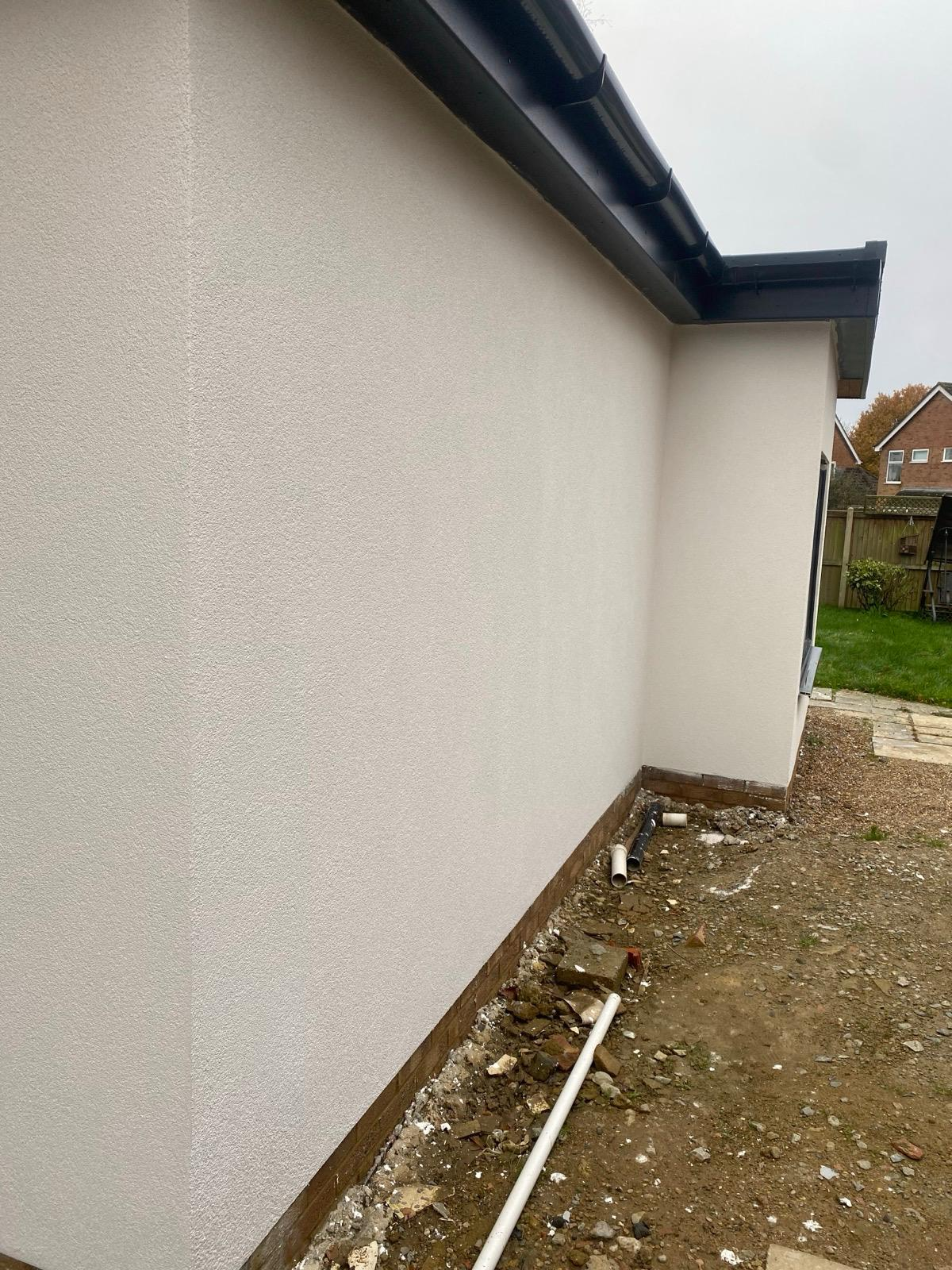
Not every house in Brighton and Hove is Regency. For later homes and new extensions, there's a wider choice of render:
- Traditional sand and cement render, usually painted.
- Monocouche render, coloured all the way through, with no painting needed.
- Silicone thin-coat render, a thin, water-repellent finish.
- Coloured and decorative finishes.
Near the sea, salt-laden wind and driving rain are hard on any render, so small cracks are worth repairing early before water gets behind them.
Permission in Brighton and Hove
Rendering rules depend on the house, not just the work:
- Like-for-like replacement of render with a similar appearance is usually permitted development.
- Changing the type or colour of render will often need planning permission.
- Conservation areas need planning permission for new render. Brighton and Hove has 34 of them.
- Listed buildings need listed building consent for significant work, inside or out.
- Article 4 directions in some conservation areas add further controls, including on painting fronts that haven't been painted before.
There can be building regulations to think about too. Our guide to planning permission for render explains it all in more detail.
Frequently asked questions
Can you repair Regency stucco with lime?
Yes, where lime is the right match for the existing render. We work with lime render and will check what your front is made of first.
Why not just patch it with sand and cement?
Modern cement render is harder and less breathable than lime. On an old stucco front it often cracks and can trap moisture, so the repair fails and can damage the wall around it.
Do I need permission to re-render my house in Hove?
It depends. Like-for-like work is often fine, but conservation areas, listed buildings and changes of colour or render type usually need consent. Check with Brighton & Hove City Council before work starts.
What colour can I paint my stucco front?
If your home is in one of the terraces or squares with a set colour scheme, you'll need to follow it. Elsewhere in conservation areas, the council resists intense or dark colours. Check its guidance first.
Do you also do plastering inside?
Yes. See our plasterer in Brighton and plasterer in Hove pages for interior work, including lime plastering.
Get a quote for rendering in Brighton or Hove
Send us photos of the front, close-ups of any cracks or hollow areas, and tell us your street. If you know your home is listed or in a conservation area, mention it. We'll come back to you with a free quote. See also our main house rendering page.
Back to Areas We Cover